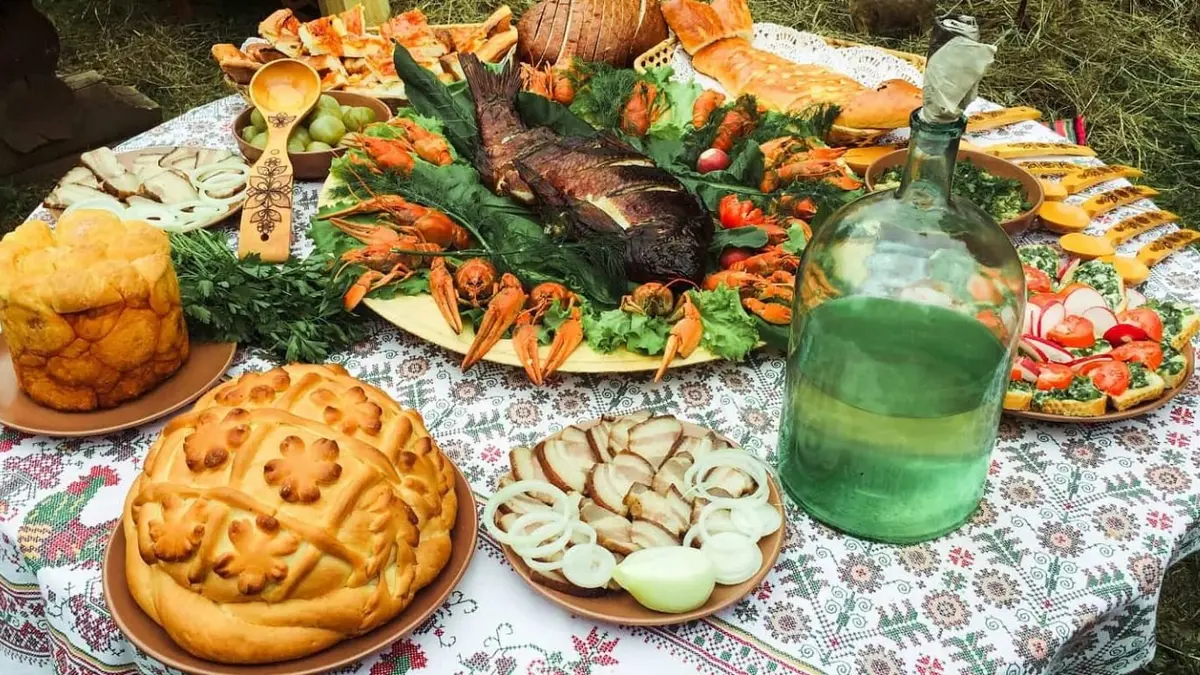
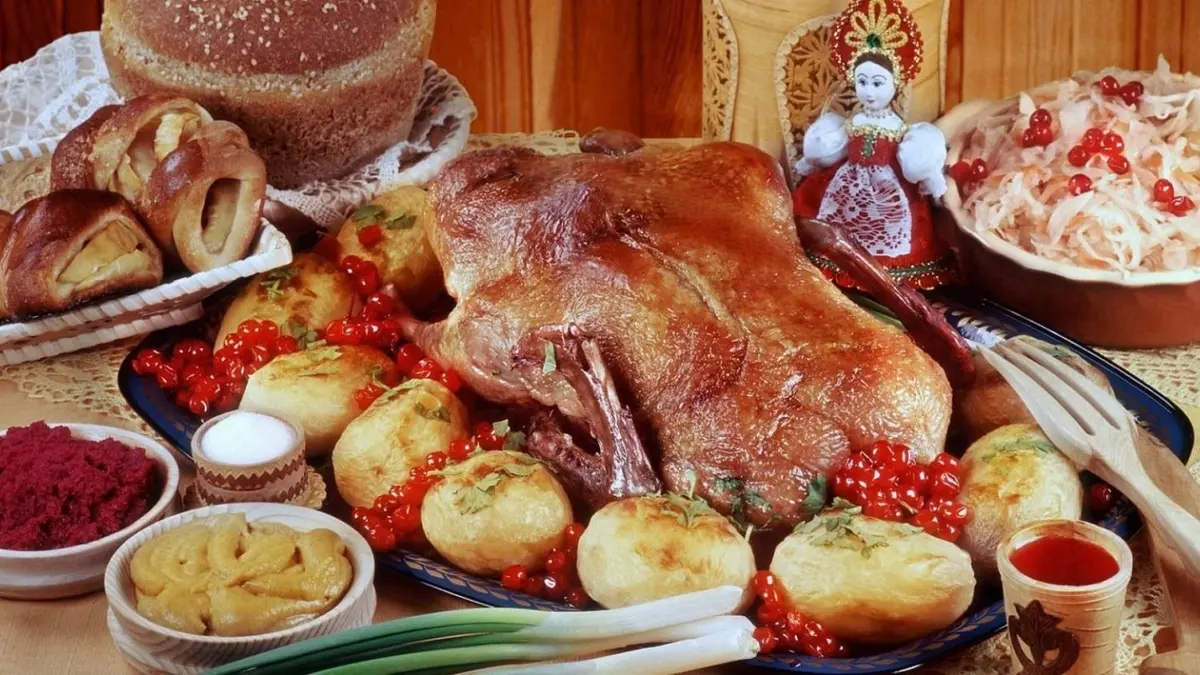
Contrary to popular beliefs, prejudices, and Western stereotypes traditionally associated with Russia, Russian Kvas holds an infinitely greater presence in the daily lives of the population, while the fame of Vodka is strictly reduced to accompanying a few specific parties, banquets, or celebrations.
Not only do Russians patriotically consider kvas to be “theirs”; across the Eurasian plains, dozens of national variants of this great fermented bread potion coexist.
Belarusians are extremely proud of their black rye bread kvas from the Lida corporation; Ukrainians catalog it under the name of Brovary bread beer; Poles inject sweet beetroot into it; Latvians add lemon juice; the Komi-Permyaks process it with oats, and Siberian hunters add horseradish to warm up the organism.
What is the real history of this beloved elixir in Russia? In this signature monograph, we will reveal in detail its millenary journey, the popular rituals and legends that the Soviets associated with its consumption, and the traditional recipe formula so you can brew your own white and rejuvenating kvas in the comfort of your home.
The Origin of Kvas: From Greek Apothecaries to the Mandate of a Prince
Etymologically, the physiognomy of the word Kvas is of purely Russian origin and directly translates as “sour drink”. Although archaeological treatises confirm that ancient Egyptians mastered primitive techniques for fermenting barley grains and that Babylonians knew elastic variants based on ripe fruits, those potions failed to consolidate a stable commercial success in those latitudes, falling into the oblivion of Assyrians, Medes, and Persians.
However, classical scholars of the stature of Herodotus and Pliny the Elder left detailed descriptions of bread concoctions whose composition milimetrically matches the matrix of kvas. Hippocrates himself praised its extraordinary healing and digestive power in his medical manuscripts—an apothecary intuition that contemporary science centuries later mathematically corroborated, proving the beneficial impact that kvas exerts on the processes of the intestinal flora and the digestive system.
Kvas increases appetite naturally, possesses a formidable energy value, quenches thirst more effectively than water, and invigorizes the body under conditions of extreme fatigue. These benefits made the liquid an indispensable ally for monks and peasants to endure extended Orthodox Lents without losing physical strength. In 1913, the medical commissions of Doctor V.S. Sotnikov scientifically confirmed the bactericidal properties of real kvas, certifying the instant death of typhoid and paratyphoid fever microorganisms upon contact with the drink’s lactic acid.
The first official documented mention of its domestic consumption in historical chronicles dates back to the year 989, a period in which Prince Vladimir the Great, on the occasion of the historic ecclesiastical conversion of his subjects to Christianity, promulgated a royal decree ordering to “distribute bread, meat, concentrated honey, and buckets of kvas to all the people”. The full assimilation of this elixir into the Russian social fabric remains immortalized in the memoirs of Doctor Leonid Simonov in 1898:
“The making of kvas is a common pattern among us in the same way as baking bread: it is crafted with mastery in the huts of peasants, in the homes of small bourgeois, merchants, and noble lords; in medieval monasteries, in military barracks, hospitals, and sanatoriums. In the capitals, corporations of fermenters operate, preparing kvas for mass sale. Our doctors unanimously state that Kvas is a cleansing, healthy drink of inestimable value for both the healthy and the sick. Recently, Western medicine is paying an elastic attention to Russian kvas, starting to recommend its consumption in Western Europe.”
— Dr. Leonid Simonov (1898)
Beyond a Simple Drink: Legends, Weddings, and Mermaids
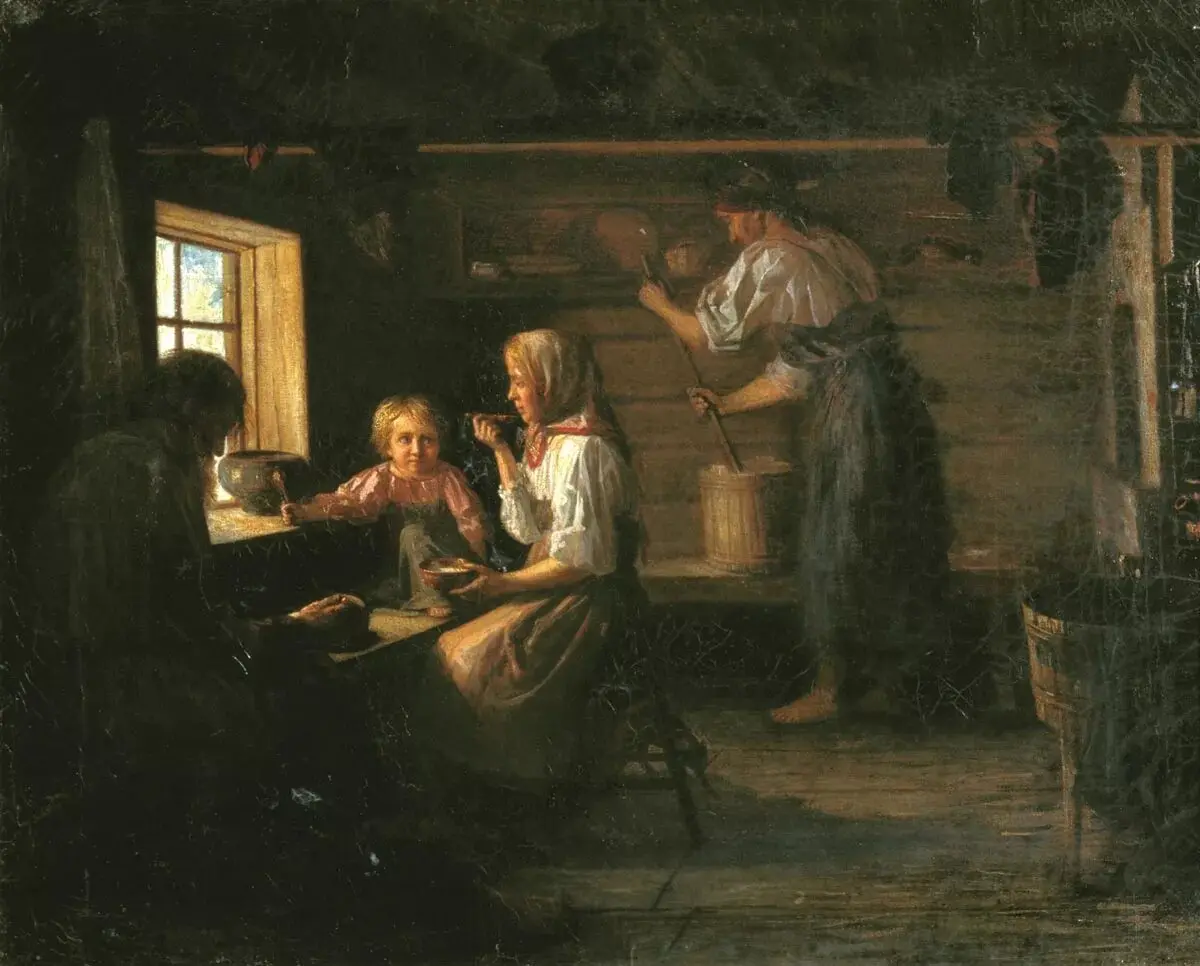
On one hand, Kvas operated as an ordinary and daily liquid infrastructure, being consumed during days of liturgical abstinence as well as during working days in the pastures, before, during, and after turning the earth over the fire. On the other hand, its historical course is densely populated by a mystical compendium of popular beliefs, magical rituals, and traditional fortune-telling. The drink protocolarily presided over the most significant milestones of the Slavic lineage: it was prepared with zeal for funeral wakes, wedding alliances, or to celebrate the birth of a new offspring in the home.
- The Transit of Souls: In the provinces of Polissya and Smolensk, mourning etiquette commanded pouring kvas directly onto the earth of the graves of loved ones during the Radunitsa festival; coinciding with the fortieth day after death, the family had to ferment an exclusive barrel of kvas, under the firm belief that the vapor of the must facilitated the soul’s transit into the heavenly kingdom.
- Nuptial Fertility Rituals: During the first dawn of weddings, before the vows were formalized in the temple, the bride and groom had to transfer kvas back and forth from one wooden bucket to another. Next, the best man took the couple by the hands and traced three full circles around the buckets, finally seating them at the table—a symbolic act designed to foster the fertility of livestock and the abundance of grain in the pasture. In the villages of Belarus, women washed the bride in the bathhouse (Banya) by pouring kvas with bitter hops over the hot stove stones to exacerbate her beauty and feminine appeal before the wedding march.
- Storm Fires and Protection Against Demons: Moscow legends stubbornly claimed that a fire caused by the direct impact of a celestial lightning bolt should never be fought with water, but extinguished by throwing whole milk or buckets of sour kvas; to stop the flames’ advance, villagers threw an iron hoop from kvas barrels into the middle of the fire. In Siberia, clay pots intended to store milk were washed with kvas and salt before being put into the oven to multiply the cream’s density, while in the districts of Kharkiv and Kursk, peasants strictly forbade turning on kvas tanks on Mondays to prevent river mermaids or the devil himself from entering weddings to bathe their creatures in the must.
Schools of Fermenters and the Invention of Okroshka
Each lineage guarded an elastic and signature recipe, naming the elixirs after their creators: Darin’s kvas, Malanyin’s kvas, or the sumptuous Varvarin’s kvas. Commercial tastes varied according to provinces: the dry kvas recipe caused a furor in the halls of the Merchant Club on Dmitrovka Street in Moscow; white kvas dominated the markets of Penza, and deep red kvas stocked the pantries of Tambov.
Toward the last quarter of the 19th century, the aristocracy developed an authentic obsession with consuming fruit variants, craft-fermenting batches of Crimea apples, wild cranberries from the tundra, boiled pears, raspberries, and ripe plums.
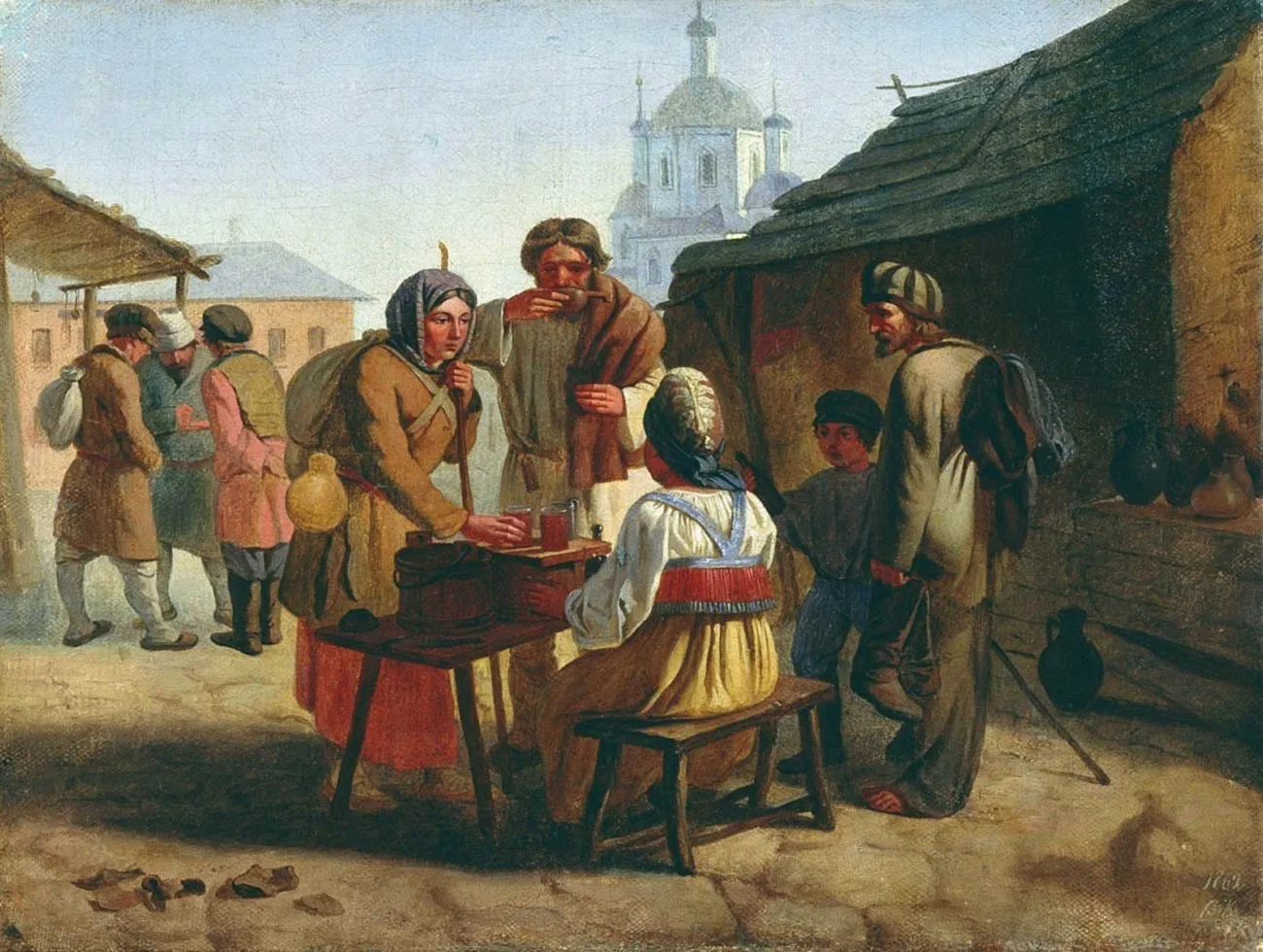
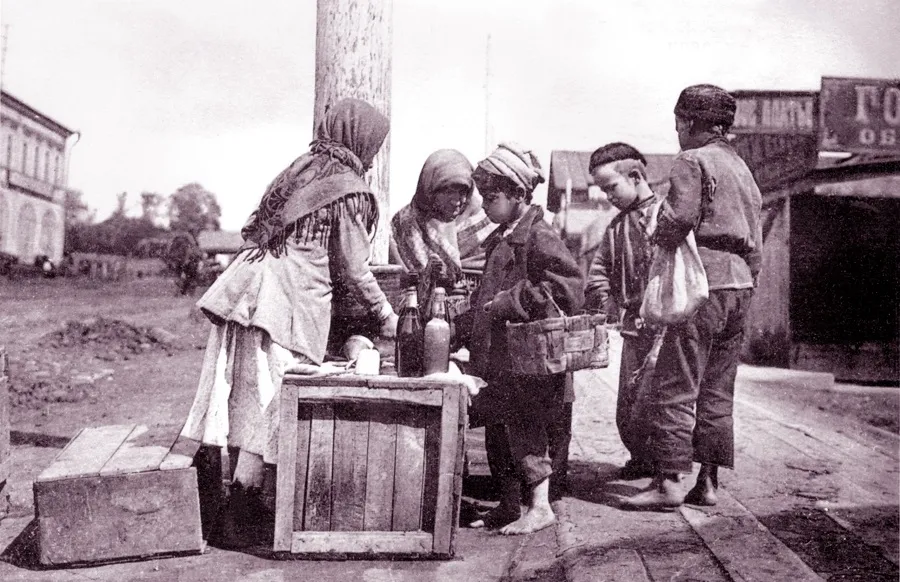
The profession of fermenter (Kvassnik) was one of the most common in Russia. Each of them specialized in making a certain type of drink. They were called “barley”, “apple”, or “pear” fermenters. They worked in a strictly designated city area, which they were forbidden to go beyond to avoid creating unnecessary competition.
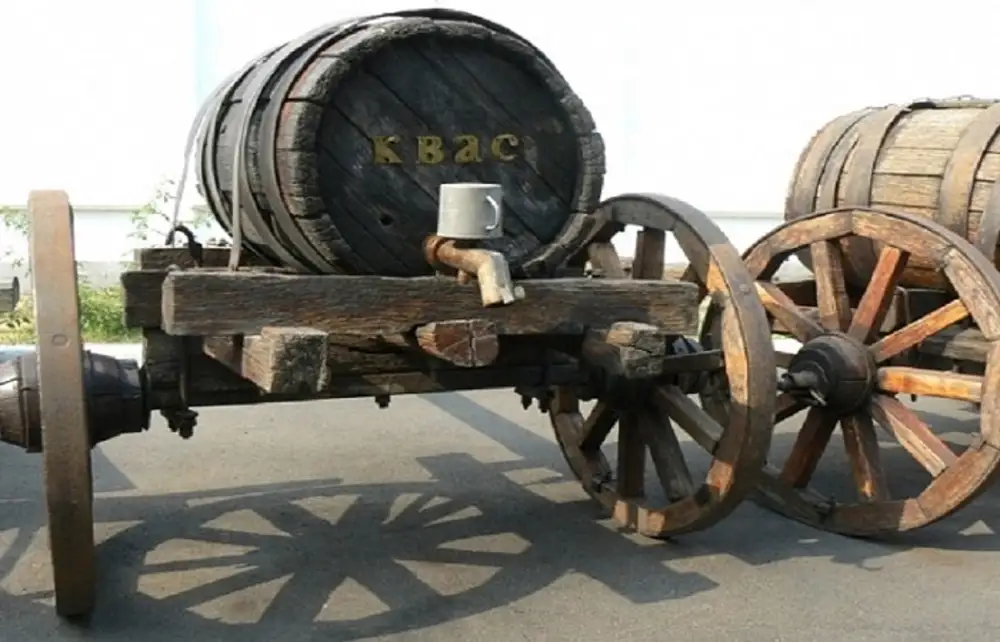
The kvassniks carried a glass container with them and something resembling a cylinder over their heads. The confidence that kvas had miraculous properties made it possible not to worry too much about hygiene, so everyone drank from the same glass.
Okroshka Salad with Russian Kvas
Few people know that okroshka salad was invented by the barge haulers of the Volga. For lunches, they were given dried Vobla (dried fish) and kvas; to soften the fish, they soaked it in the bread drink (Kvas). Subsequently, vegetables were added to the recipe for greater satiety. Today, fish okroshka is not as popular as meat okroshka, but kvas remains an invariable component of both.
By the beginning of the 19th century, there were more than 500 varieties of popular drinks with many flavors. Brewed pear kvas was a particular favorite among Muscovites.
The kvas recipe prepared by ancient Russians was not harmless: the alcohol content could reach up to 15%.
Typical Scenes Related to Russian Kvas
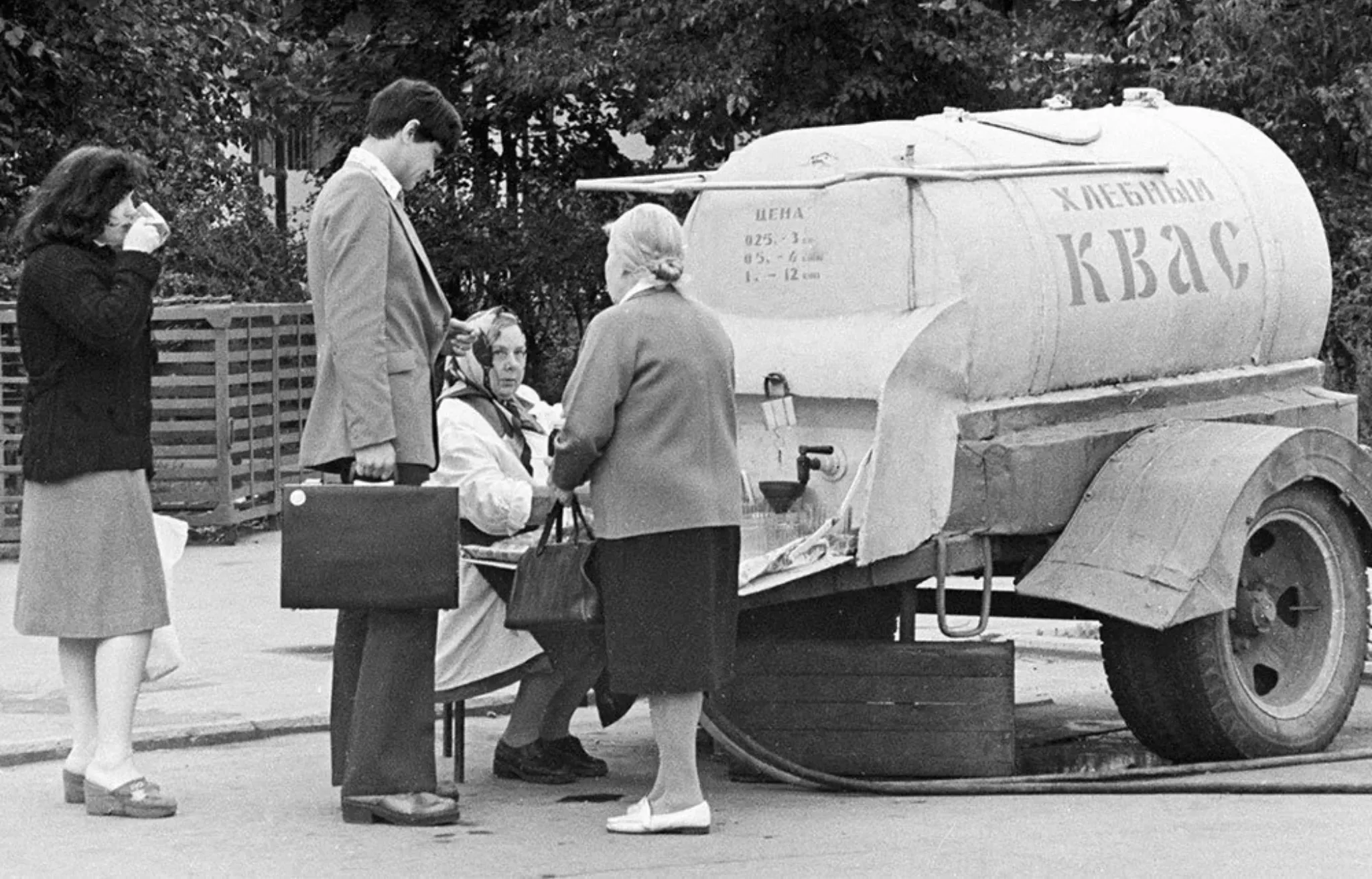
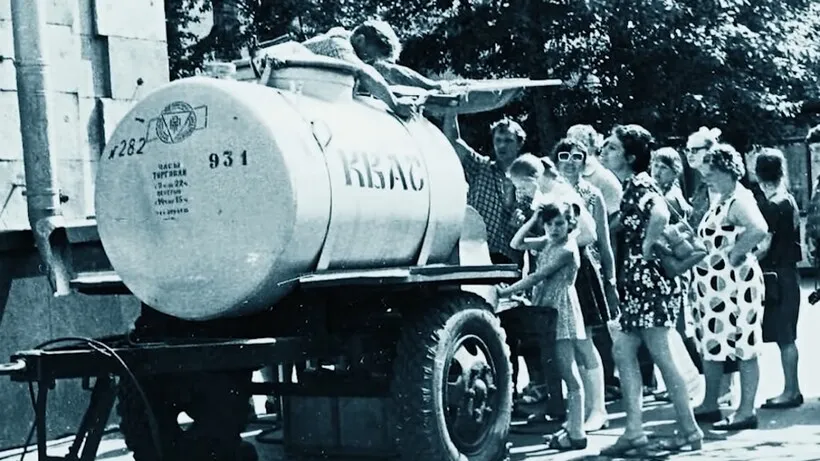
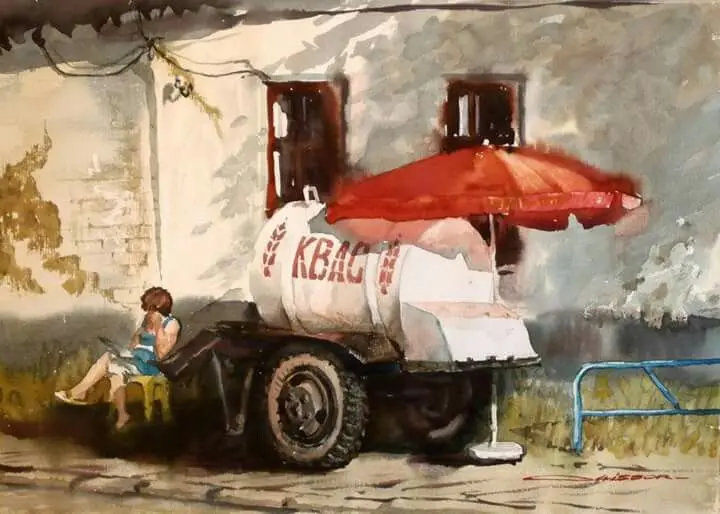
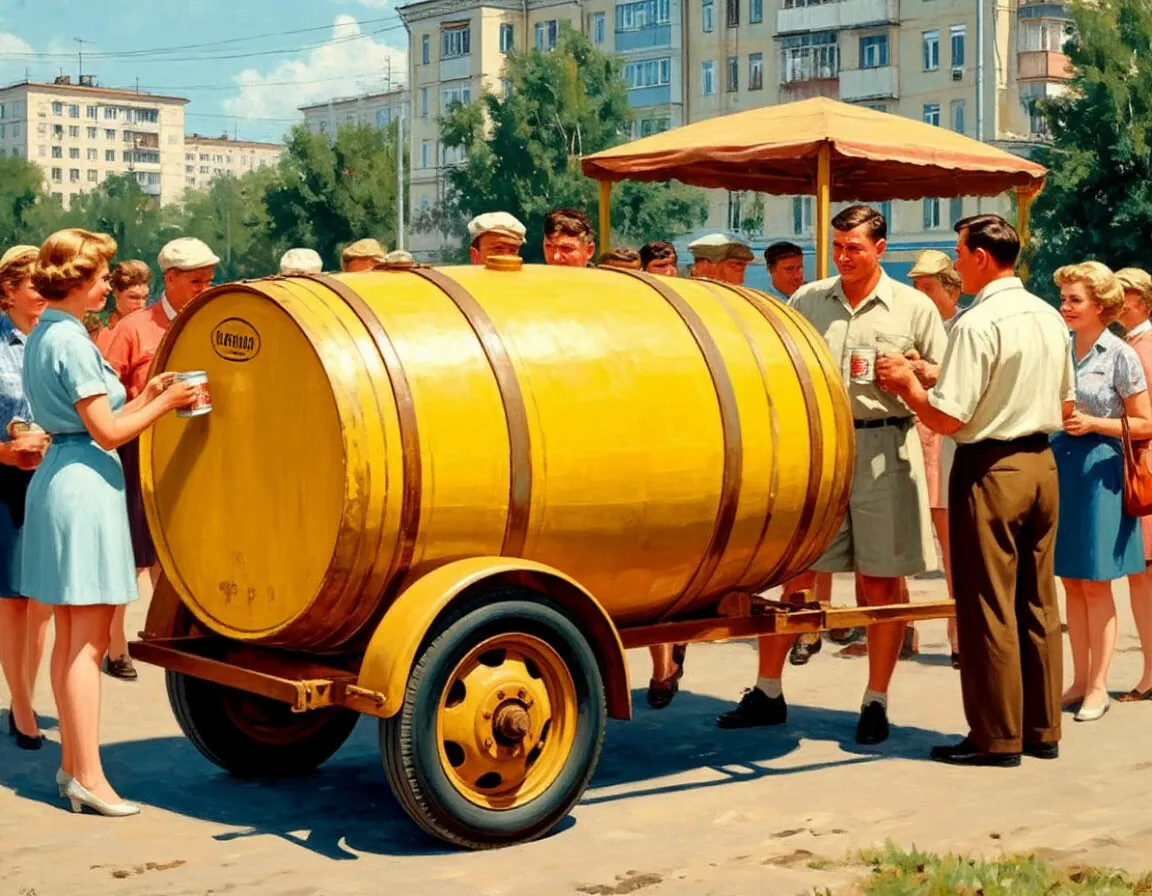
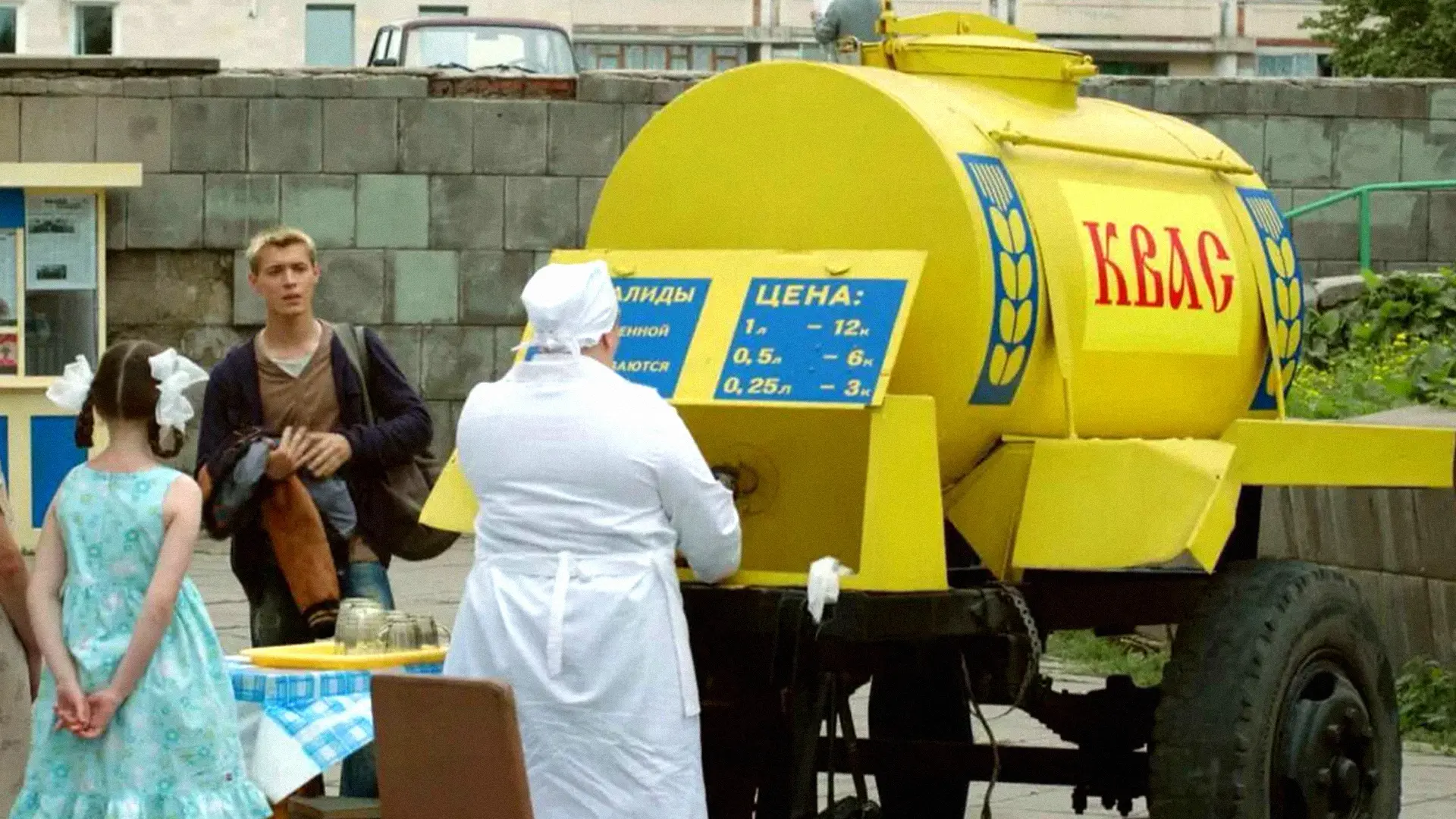
A barrel of Russian kvas, surrounded by people with tin cans and glasses, was a familiar detail of the summer urban landscape. Respectable men drank the beverage with pleasure, as did respected housewives.
But at the beginning of the 90s of the 20th century, kvas began to give way to drinks imported from the West, which in the Soviet era was hard to imagine. Furthermore, the sale of Kvas in unsanitary barrels also generated a negative perception of the drink.
But today, Kvas is returning to its positions! Russians have started brewing it at home once again.
Let’s Prepare White, Refreshing, and Rejuvenating Kvas!
You will need:
- 300 g of rye flour
- 3 Liters of boiling water
- 100 g of sugar or honey
- A glass of rye crackers
- A handful of raisins
- Horseradish, mint, or currant leaves
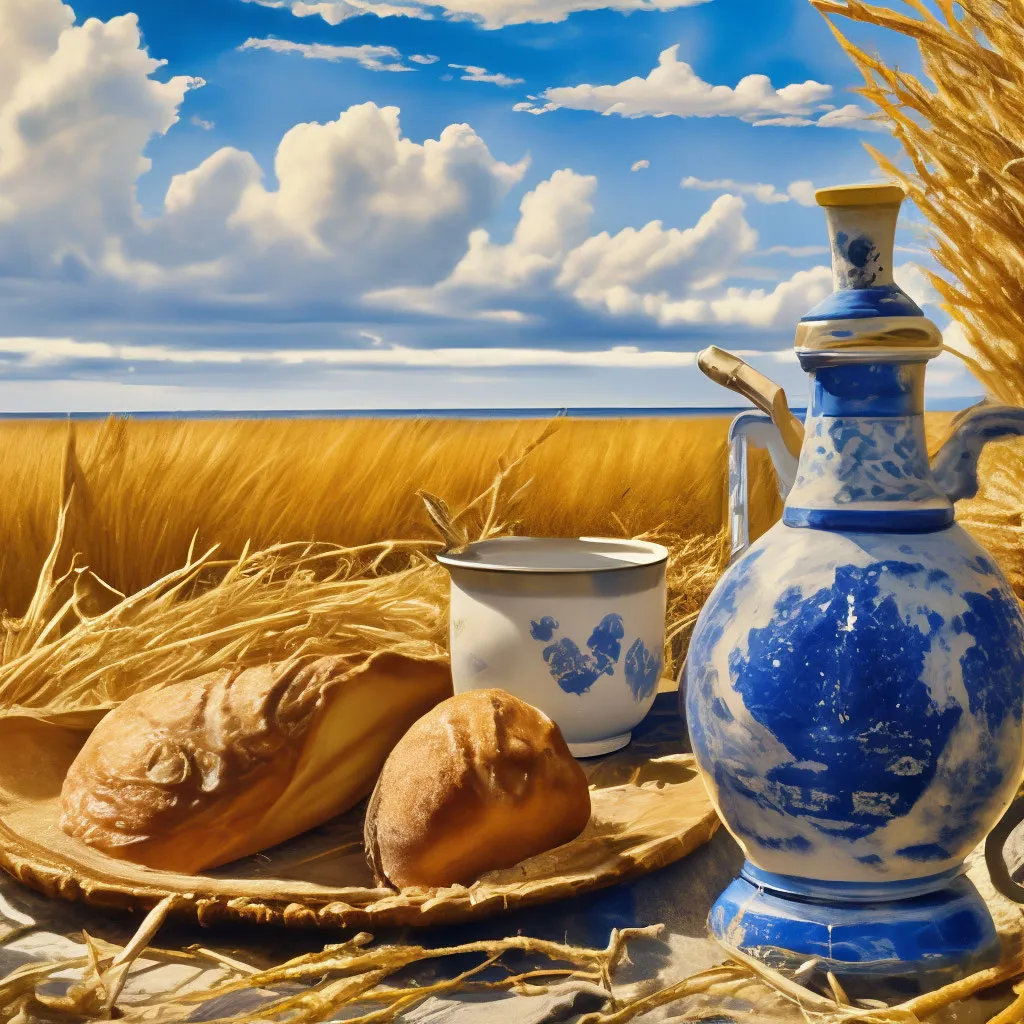
Dilute the rye flour with boiling water and mix well. Add raisins and crackers to the cooled, but still warm, mixture, close the pot tightly, and place it in a warm location for one or two days. As soon as thick foam has formed on the surface, the kvas is ready! Strain, bottle, and place in the refrigerator.
Enjoy Russian Kvas with Us
During our excursions in Moscow, St. Petersburg, and other cities, we always look for the opportunity to taste typical Russian drinks and foods.
If you have plans to travel to Russia, do not hesitate to contact us, and we will help you plan every single day you will enjoy during your trip perfectly.
Do you wish to refresh your monumental tours by savoring an artisanal Kvas brewed in the monasteries of Sergiev Posad under the guidance of a private tour in your own language? We shield your vacations. Contact our concierge service directly or explore our custom programs by discovering our select Tours Catalog in Russia.