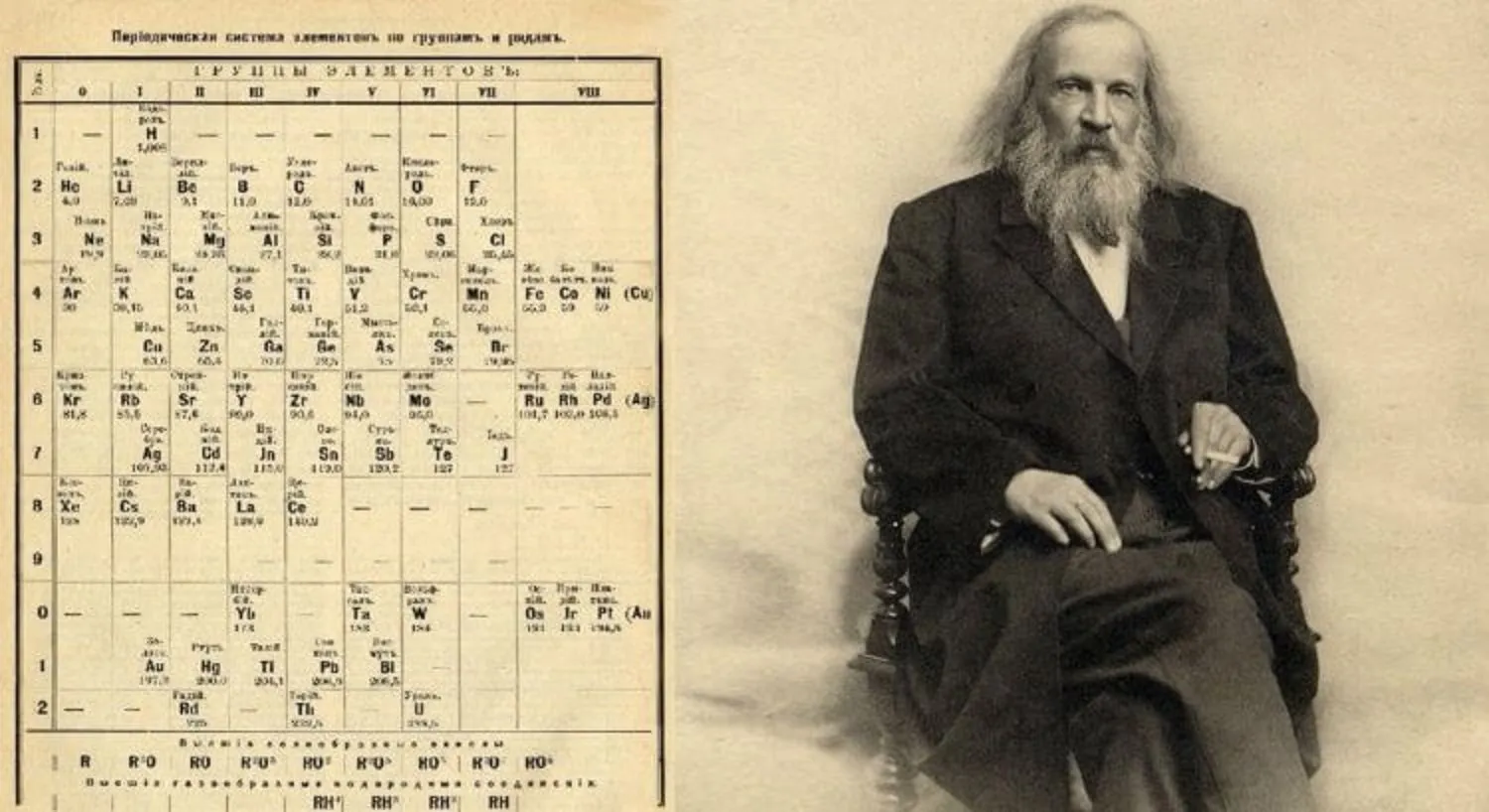
Dmitri Ivanovich Mendeleev stands undisputedly as a true luminary of Russian science, whose name and theoretical contributions are universally recognized and revered across the entire planet.
We are looking at one of the most multifaceted and prolific personalities in world history; his natural intellect and the authorial skills acquired throughout his life journey made him an active and fundamental public figure for the socioeconomic and technological development of the Russian Empire.
Brief Biography of a Brilliant Mind
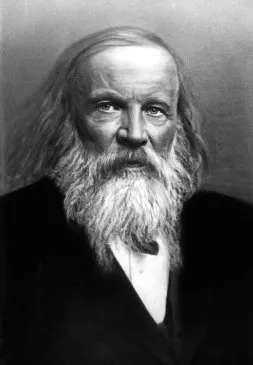
Mendeleev was born in the remote Siberian city of Tobolsk on January 27 (February 8 according to the Gregorian calendar), 1834, being the youngest offspring of a large family led by the director of the local gymnasium. Demonstrating preeminent academic lucidity from his early youth, in 1855 Dmitri graduated with highest honors from the Faculty of Physics and Mathematics of the Main Pedagogical University of St. Petersburg, the former capital of the czars.
Just one year after completing his degree, he defended his master’s thesis with resounding success and, in the year 1857, began giving lectures at the Imperial University of St. Petersburg, teaching a revolutionary course in organic chemistry.
Mendeleev’s creative activity was not confined to monotonous outlines or narrow niches; his elastic genius addressed with equal scientific rigor highly complex subjects such as political economy, institutional pedagogy, precision metrology, meteorology, and the development of chemical technologies applied to mining.
The Discovery of the Periodic Table (1869)
The crowning work that secured him universal scientific immortality was the discovery of the Periodic Table of Chemical Elements. Dmitri Ivanovich deciphered the law of structural periodicity of atoms in a purely natural way in February 1869, while he was dedicated to writing an organic chemistry manual for his own university students.
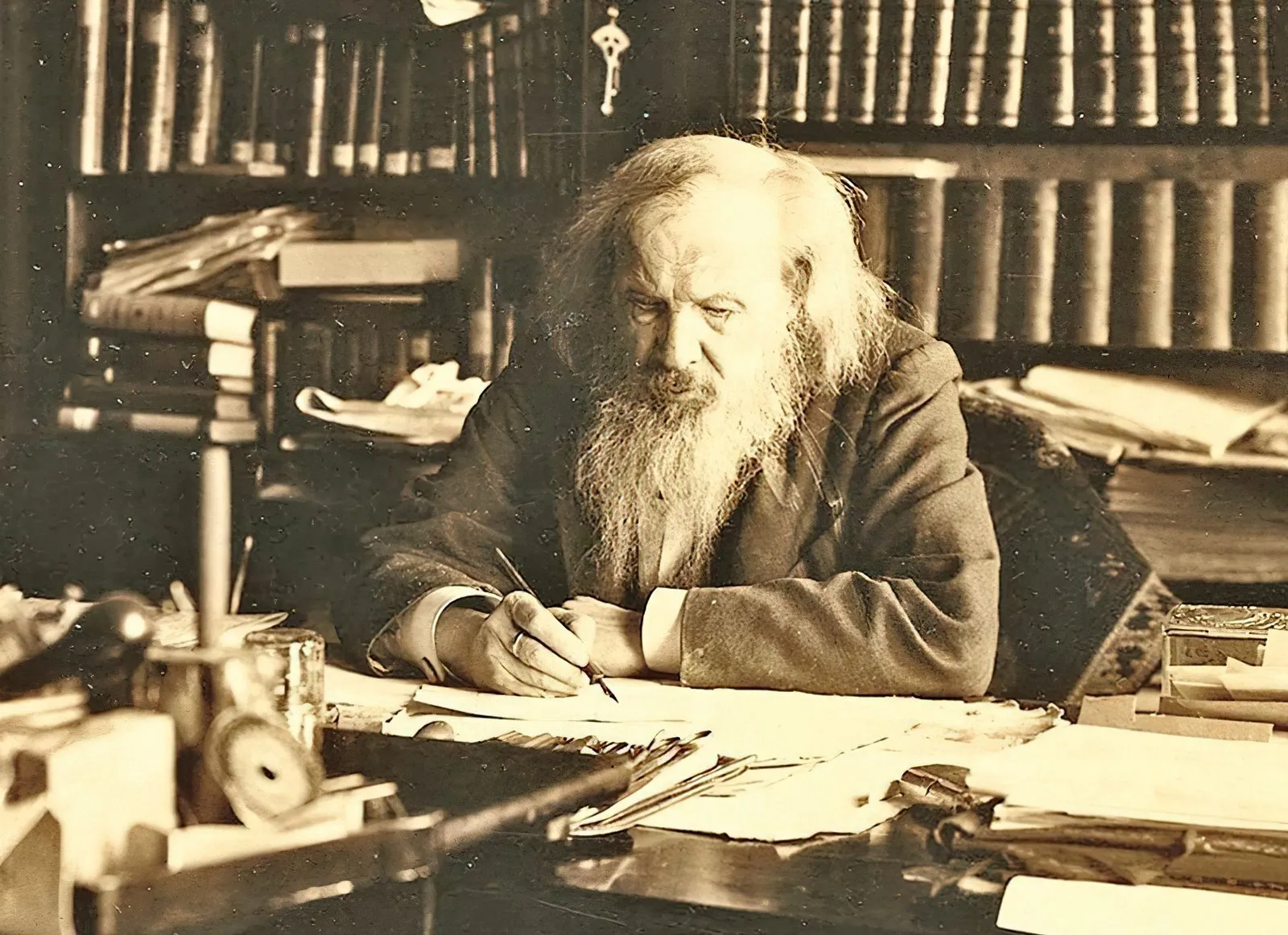
Faced with a total absence of textbooks that met the rigorous conditions demanded by the St. Petersburg academy, the Russian scientist sat at his author desk to calligraph the manuscripts of his treatise "Principles of Chemistry", sorting the cards of the elements according to their atomic weight on February 17, 1869.
In its initial stages, the Russian chemist’s discovery was received with notable coldness, caution, and disdain by factions of the Western scientific intelligentsia.
However, international skepticism crumbled in a definitive manner as laboratories around the planet began to physically discover the exact chemical elements whose existence, weight, and density Mendeleev had predicted with total mathematical accuracy in his tables: gallium, scandium, and germanium.
From that moment on, Mendeleev’s Periodic Table received unanimous global applause and recognition, constituting the absolute foundation upon which the entirety of contemporary inorganic chemistry rests; without its elastic design, it is impossible to imagine the landscape of modern 21st-century sciences.
Contributions to Physics, Metrology, and Agriculture
Beyond his credentials in chemistry, Mendeleev injected high-value breakthroughs into other disciplines: in the field of physics, he determined with precision the absolute boiling point of liquids and deduced the equation of state for one mole of an ideal gas (the famous Clapeyron-Mendeleev equation).
In the field of high-end metrology, he created a precise mathematical theory of balances and proposed new, clean, and highly exact methods for weighing heavy bodies.
Mendeleev understood perfectly that the financial success of a State is closely linked to its development of scientific infrastructure; therefore, he dedicated huge blocks of time to solving the needs of the oil extraction industries in Baku and coal in the Donets basin.
Likewise, in alliance with Dokuchaev’s theories, he advocated for the creation of Soil Sciences and demonstrated practically on his experimental farms that it was viable to multiply the fertility of cultivated lands using chemical fertilizers and modern elastic irrigation systems in the heavily challenged Lower Volga region.
Imperishable Memory and the Mendelevium Element
Throughout his career, Dmitri Ivanovich accumulated more than one hundred and thirty certificates, diplomas, and honorary titles conferred by the most prestigious scientific societies and academies in Europe and America.
Pride in his legacy has immortalized his name on the planet’s map and in space: from geographical features like underwater ridges and active volcanoes on Earth, to protected craters on the Moon and the layout of artistic metro stations in Moscow.
As the definitive golden touch to his memory, American scientists synthesized a new transuranic radioactive chemical element in the middle of the 20th century, officially naming it in physics catalogs as Mendelevium (Md, atomic number 101). Mendeleev passed away in St. Petersburg in January 1907, being rightfully considered one of the world’s most colossal thinkers.
Do you wish to tour the Mendeleevskaya metro station in Moscow and reveal the stories of the great Russian scientists under the guidance of a VIP service in your language? We shield your vacation. Contact our travel advisors directly or explore custom programs in our exclusive Private Tours Catalog in Moscow.