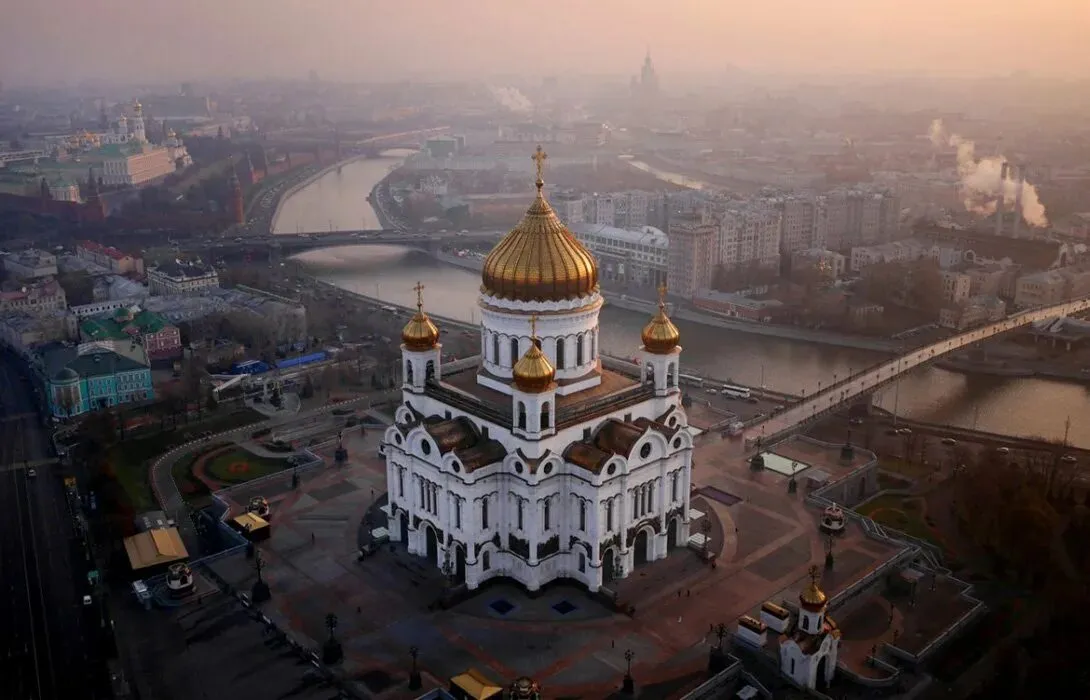
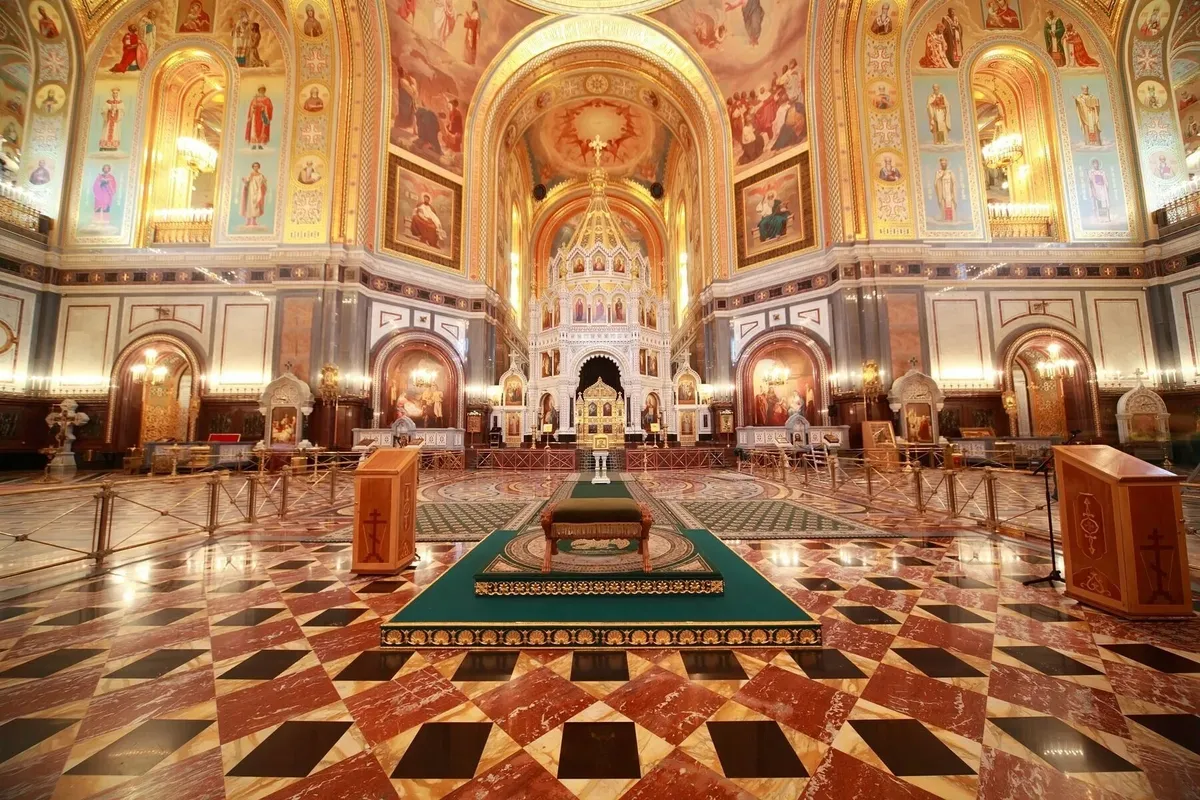
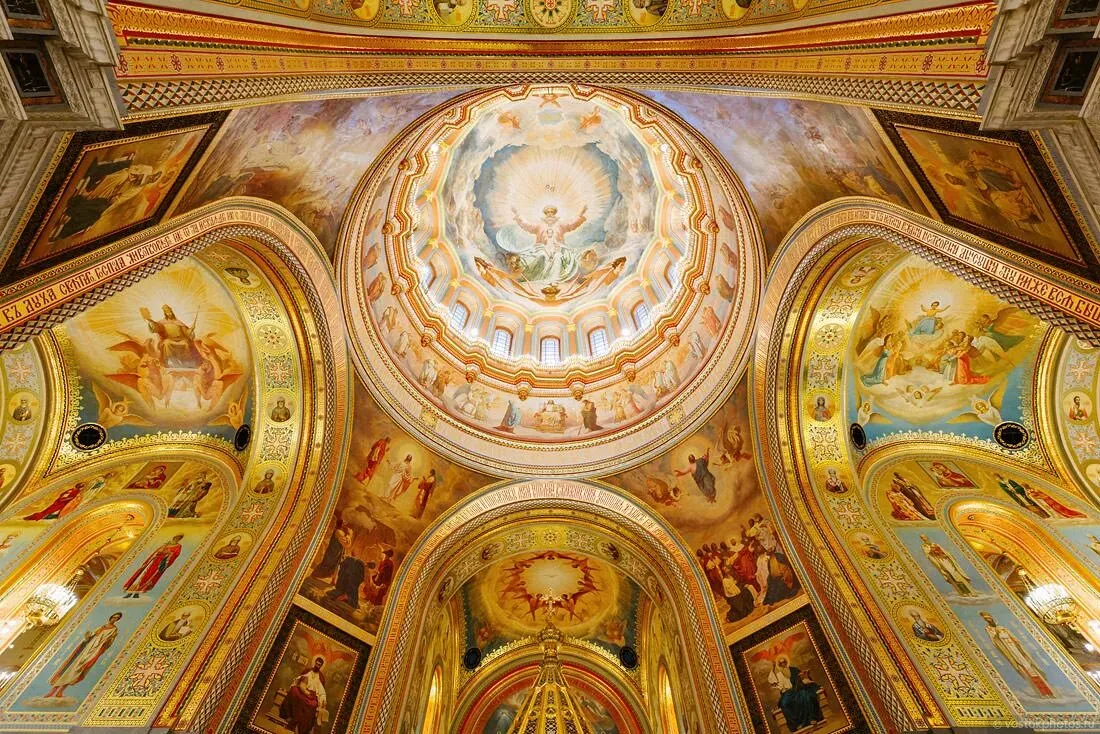
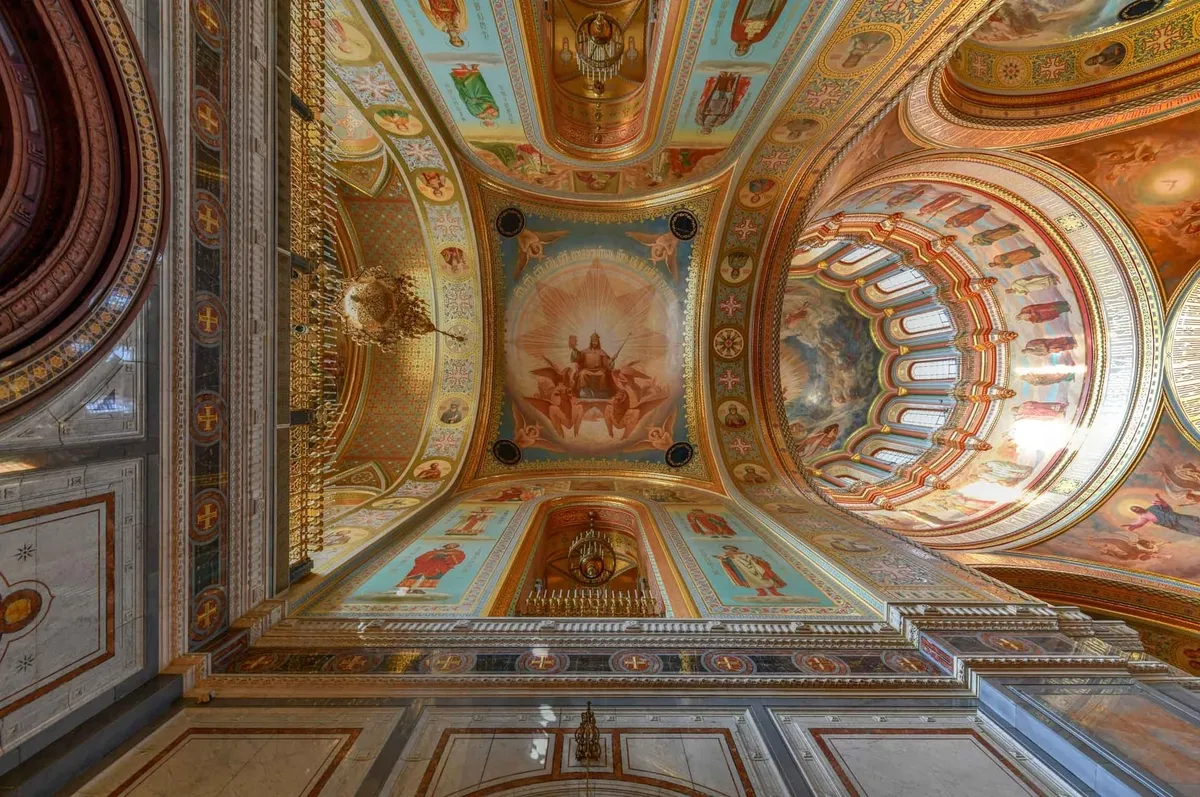
The vibrant city of Moscow provides travelers with thousands of tourist attractions of inestimable heritage value. However, as happens in the urban fabric of any great monumental metropolises, certain enclaves always stand out with their own light, either due to the grandeur of their architecture or the deep dramatic weight of their historical past. The Cathedral of Christ the Savior in Moscow undoubtedly constitutes one of these essential sacred landmarks.
The monument attracts hundreds of thousands of worshipers and high-end tourists annually. When planning a trip to the capital of the tsars, stopping before its white gates is invariably a feature in the schedule of the most select tours. We are going to delve into the chronicles of this universal masterpiece, reviewing its complex construction in imperial Russia, its tragic demolition with dynamite in the Soviet era, and its miraculous contemporary architectural rebirth.
Heritage of the Patriotic War of 1812: The Vow of a Tsar
The defensive war against the French troops of Napoleon Bonaparte in 1812 left indelible marks on the country’s annals, especially in the urban fabric of Moscow, where the great fire of the city marked a historical turning point. To commemorate the victory and honor the memory of the heroism of the fallen soldiers of the Russian Imperial Army against the invaders, the authorities ordered the erection of commemorative monuments, weapons halls, and, monumentally, a grand votive temple: the Cathedral of Christ the Savior, originally conceived as an immense national stone cenotaph.
In December 1812, General Piotr Kikin, moved by a deep patriotic fervor, formally proposed through a letter addressed to Admiral Aleksandr Shishkov the need to build a monumental church in gratitude for the liberation of the territory. Emperor Alexander I of Russia immediately backed the initiative, promulgating the Supreme Manifesto on December 25 of that same year, ordering the start of preparations to raise the temple in Moscow.
The Truncated Project of Karl Witberg: A 240-Meter Giant
It is not viable to delve into the history of this sanctuary without analyzing the first architectural project that failed completely on the scaffolding: the mystic-cut megatemple designed by the architect of Swedish origin Karl Witberg.
Witberg was crowned the undisputed winner of the demanding international design competition organized by the court in 1814, prevailing against firms of the stature of Andrei Voronikhin, Vasily Stasov, or the celebrated Italian architect Giacomo Quarenghi, creators who yearned to be awarded the state contract. The initial guidelines planned to complete the construction of the sanctuary within a period of between 10 and 12 years.
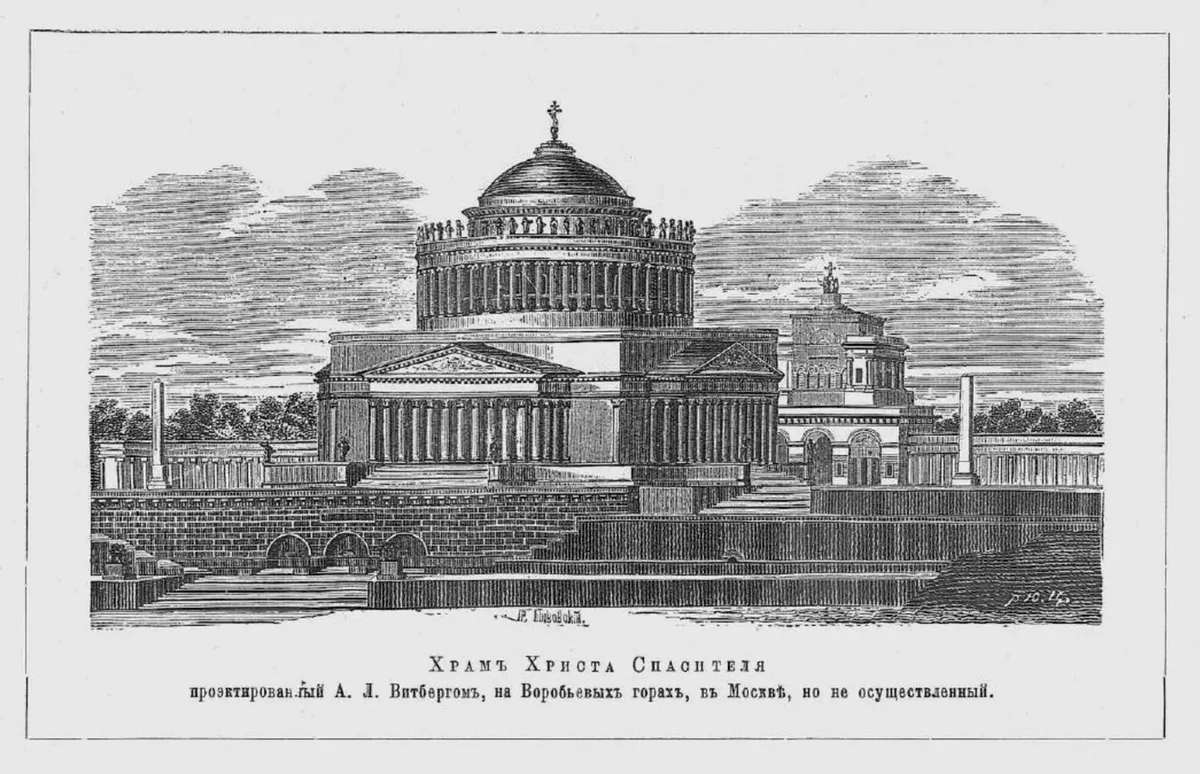
Witberg’s proposal boasted colossal dimensions: compared to the structure that stands today, his design was three times larger, planning a monumental height of 240 meters. The complex incorporated a sumptuous exterior circular colonnade forged exclusively with 600 stone columns and captured French cannons, an immense Pantheon of the Fallen, and equestrian monuments dedicated to military leaders and monarchs. The superb temple was projected to be built at the top of the Sparrow Hills.
To officially start the work, a fastuous inaugural ceremony was held on October 12, 1817, attended by Tsar Alexander I, the high clergy, the nobility, and an overwhelming crowd of nearly 400,000 Moscow citizens who flooded the hill. However, completely lacking experience in managing works of such magnitude, Witberg was overwhelmed by foundation problems and financial diversions; after seven years of costly excavations, the project had barely advanced beyond the earth-moving stages.
Following the passing of Tsar Alexander I in 1825 and the subsequent coronation of his brother, Emperor Nicholas I of Russia, the luck of the project took a drastic turn. The new monarch immediately canceled Witberg’s license, ordering an audit of the commission’s accounts. Those directly responsible for the works were tried for embezzlement of the public treasury and abuse of trust, suspending the work on the hill entirely.
The Rebirth of Konstantín Ton’s Russo-Byzantine Temple
By the year 1831, the debate surrounding the construction of the Cathedral of Christ the Savior once again presided over government halls. On this occasion, Emperor Nicholas I expressed his absolute predilection for the aesthetic currents of the "Russo-Byzantine" style, an architectural historicist trend brilliantly developed by the academic Konstantin Ton. By royal decree and direct designation of the tsar, Ton was appointed chief architect of the project.
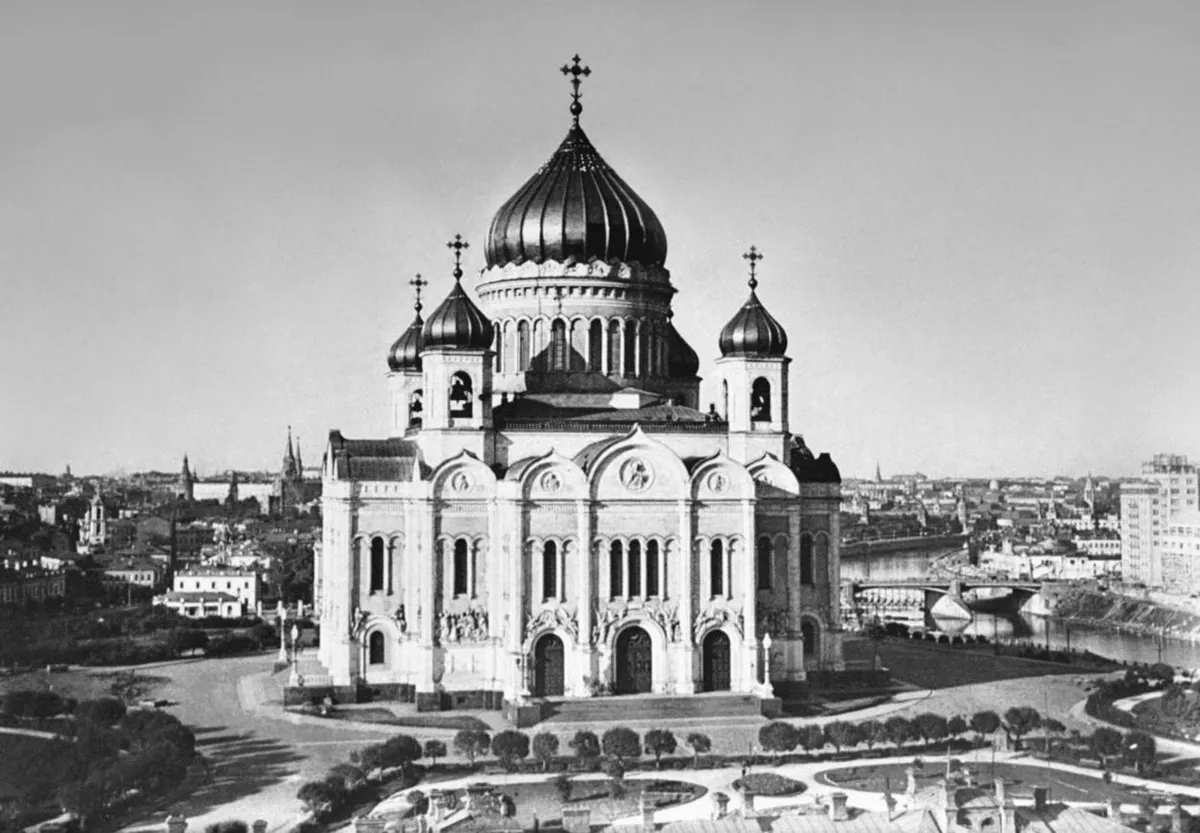
A new geographic location was selected for the works, positioning it this time near the Kremlin, on the banks of the Moscow River. The pre-existing residential neighborhood in the area was expropriated and demolished by the treasury, including the old facilities of the Alekseevsky convent of nuns.
According to urban legends circulating in Moscow, the elderly abbess of the convent, enraged by the forced eviction, cursed the enclave’s subsoil, solemnly predicting that no human construction would manage to stand on that ground for long.
In August 1837, exactly coinciding with the commemoration of the 25th anniversary of the historic Battle of Borodino, the first stone of Ton’s temple was laid. However, the active construction of the granitic stone structure did not formally begin until September 1839, stretching out masonry work, marble finishes, gold filigree, and interior wall fresco painting over a prolonged period of 44 years.
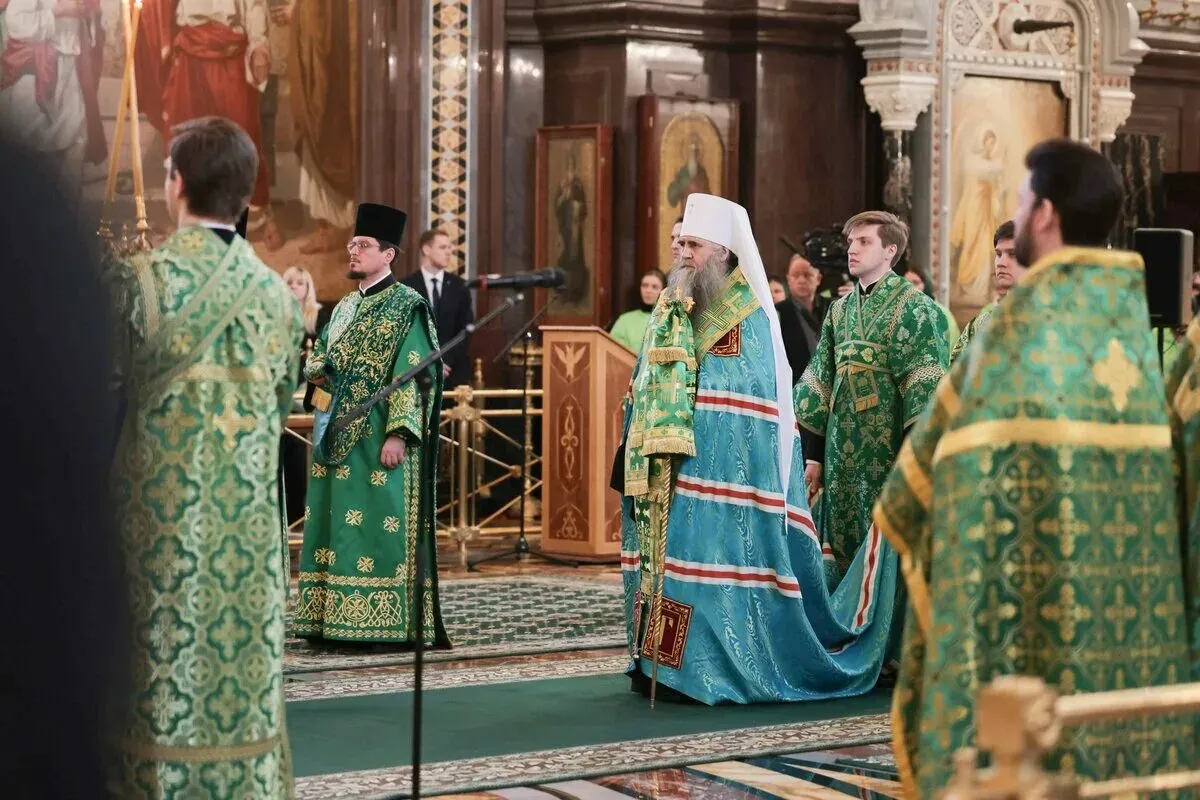
The consecration of the Cathedral of Christ the Savior of Moscow finally took place on June 7, 1883, officiated with great liturgical pomp by Metropolitan Ioanniky. The solemn gala ceremony was attended by Tsar Alexander III—who had ascended the imperial throne shortly before following the assassination of his father—along with the tsarina, members of the dynastic court, the high ranks of the Orthodox clergy, and the Moscow aristocracy, consolidating the sacred palace as the most sumptuous and largest temple in Russia.
The Barbarism of the Soviet Era: The Blast of 1931
Following the triumph of the October Revolution of 1917 and the establishment of the Bolshevik regime, the communist government promulgated a radical decree that immediately suspended public funding for all temples, churches, and properties of a religious nature across the Soviet Union. The high operating costs for maintenance, cleaning, and technical repair of the cathedral became exclusively dependent on private donations from local communities of worshipers.
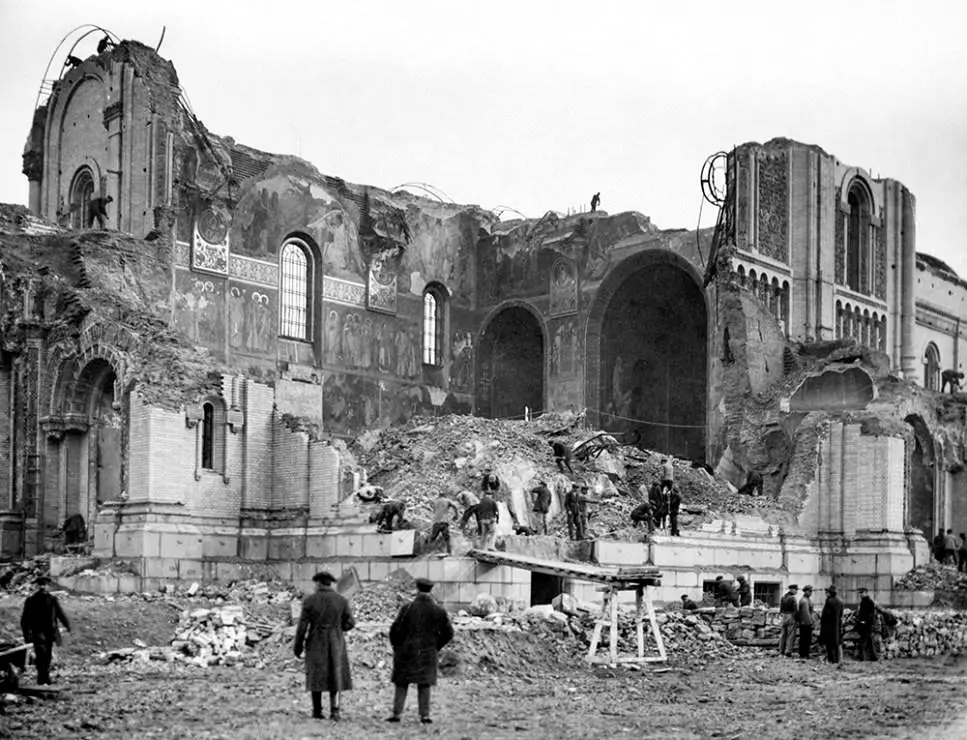
On July 13, 1931, the Central Executive Committee of the USSR held an urgent assembly under the leadership of the party top officials. As a conclusion of the political ruling, the total demolition of the Cathedral of Christ the Savior was decreed with the urban planning objective of clearing the site and building the fastuous Palace of the Soviets in its place—a gargantuan skyscraper over 400 meters high topped by a giant statue of Lenin that would function as the hub of international communism.
Due to the extraordinary thickness of Ton’s walls and the robustness of its granite foundations, manual dismantling tasks by workers proved fruitless. For this logistical reason, on December 5, 1931, the historic monument of the 1812 victory was reduced to rubble through the detonation of two powerful dynamite explosions that shook the central districts of Moscow.
By 1837, foundation work and steel structuring began to raise the Palace of the Soviets; however, the construction work suffered a total and irreversible paralysis due to the outbreak of the Great Patriotic War (World War II on the eastern front) in 1941, with the government having to dismantle the metal beams to repurpose them into anti-tank defenses and weapons for the defense of Moscow. Once the military conflict concluded, the financial difficulties of the post-war period forced the definitive abandonment of the megaproject. In 1960, taking advantage of the immense flooded foundation pit, the Soviet authorities inaugurated the Moskva pool, a colossal outdoor circular recreational facility that remained operational until 1994.
Modern Rebirth and the Patriarchal Bridge
With the final phases of Perestroika in 1989, the newly reborn Orthodox community held a “popular referendum”; during which thousands of Soviet citizens supported the idea of restoring the Cathedral of Christ the Savior.
On December 5, 1990, a first stone was laid at the site of the future construction. In 1992, a fund was opened to finance the reconstruction of the temple, and by 1994, construction began.
The project for the reconstruction of the temple was overseen by architects Mikhail Posokhin, Alexei Denisov, and Zurab Tsereteli. By 1999, the Cathedral of Christ the Savior was erected as a conditional external copy of the destroyed original.
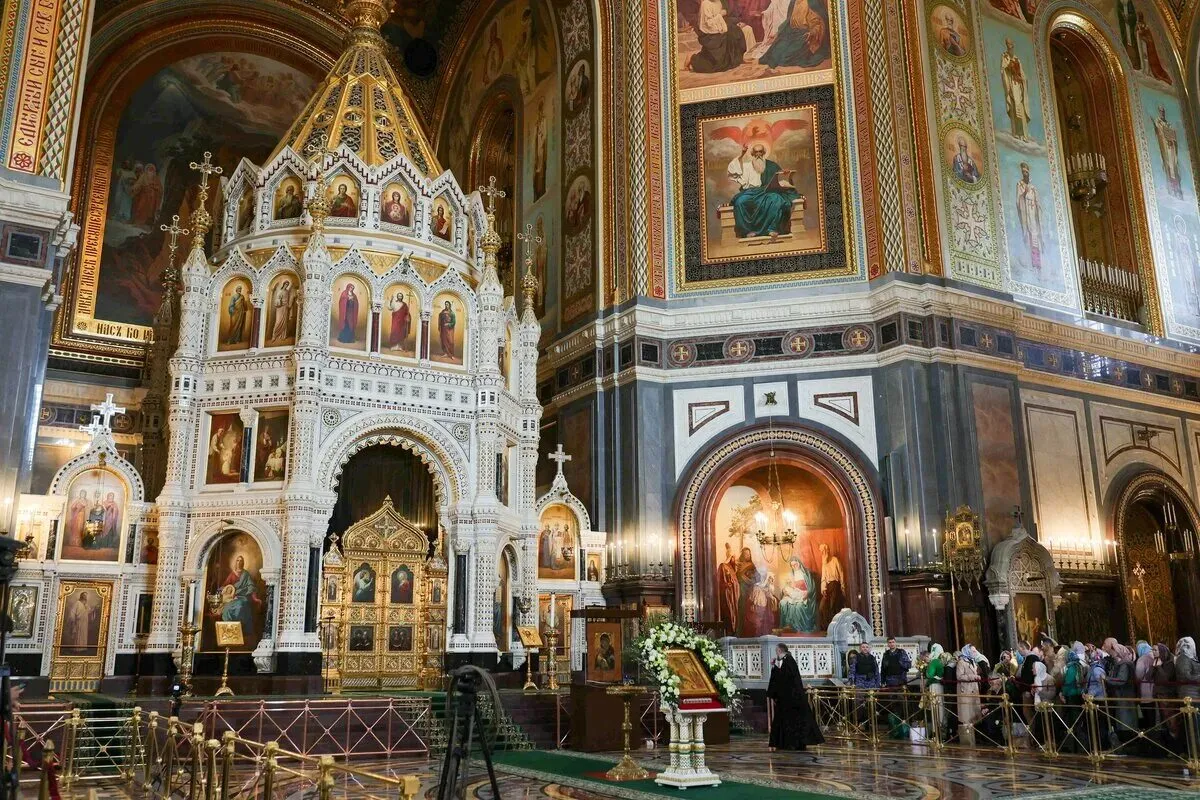
On December 31, 1999, the temple opened to the public. On the night of January 6 to 7, 2000, the first solemn Christmas liturgy was celebrated inside.
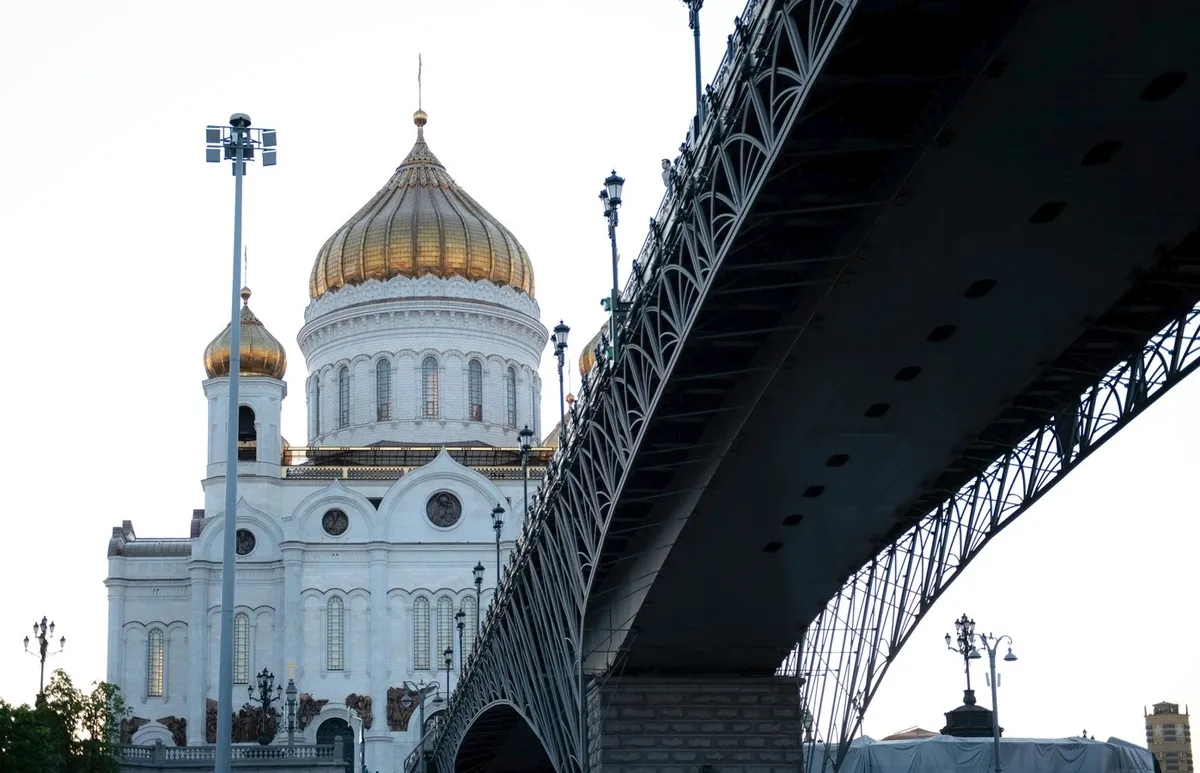
In 2004, the Patriarchal Bridge was inaugurated in front of the temple, connecting the Prechistenskaya, Bersenevskaya, and Yakimanskaya embankments, starting directly from the terrace of the Cathedral of Christ the Savior.
The Cathedral of Christ the Savior in Moscow and the pedestrian bridge are excellent tourist viewpoints, where visitors to Moscow can contemplate excellent views of the city’s historical center and the Moscow River.
Traveling to Russia and visiting the city of Moscow cannot be complete without a visit to the temple and the Patriarchal Bridge; contact us and we will organize tours tailored to your needs.
Join our Moscow tours and enjoy this unique wonder.
Do you wish to step into the corridors of this neoclassical cathedral and contemplate the best views of the capital from the Patriarchal Bridge, skipping the annoying entrance lines? Let us coordinate your gala day in Moscow. Contact our team of official English-speaking guides directly or explore our select Private Tours Catalog.